All the pictures in my blog were AI generated by using Fanny Pettiford’s female descendants pictures.
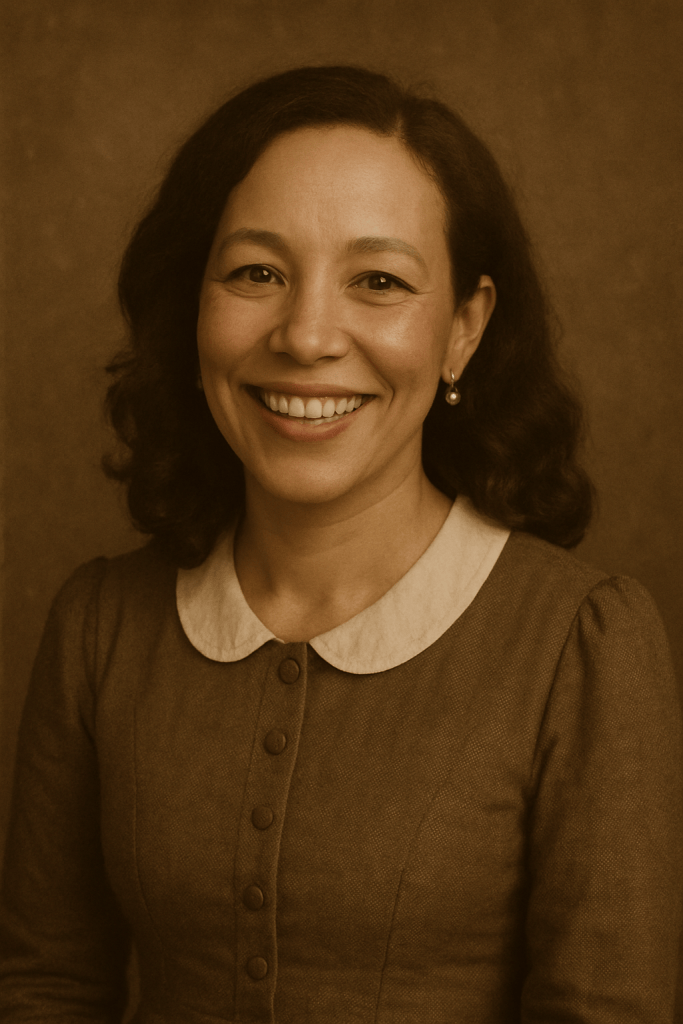
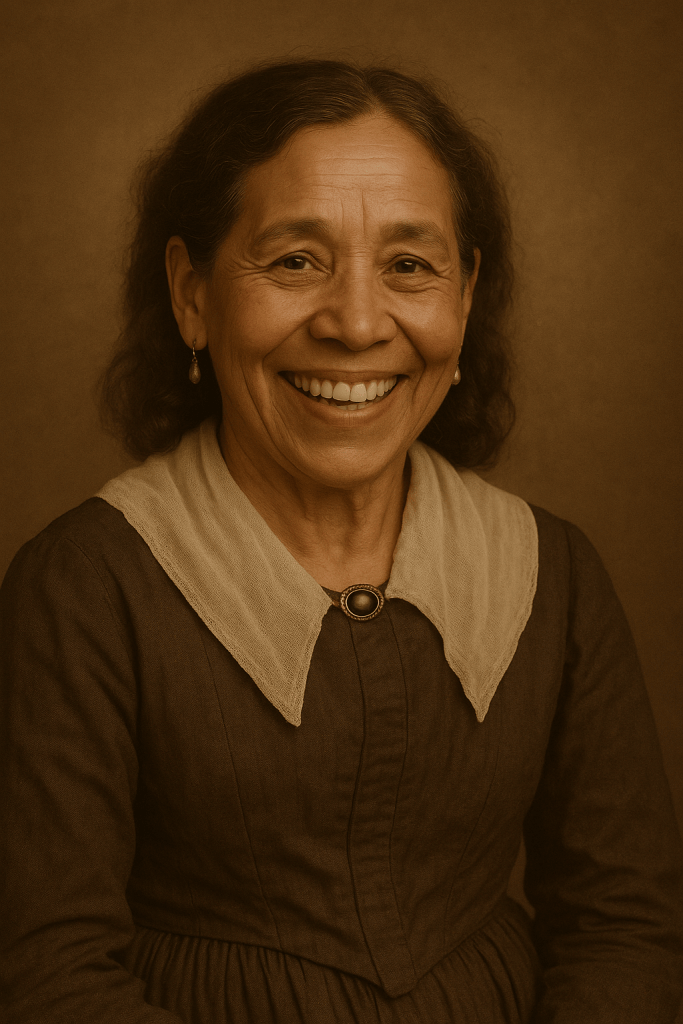
This blog, my first Genealogical Roots and Journeys Revealed blog, is about Fanny Pettiford, my fourth great grandmother on my paternal grandmother Margaret Collins Arnold’s lineage. Fanny was a free woman of color during the slavery era in the state of Kentucky.
This blog is about how I found my connection to Fanny with the use of online documents, which had no birth certificates for my ancestors, and the Ancestry company’s DNA with cousin matches data base. I have added hyperlinks to my source documents, which link to Family Search’s free search genealogy repository of documents. Hyperlinks that are not in the Family Search repository are linked to documents in Ancestry’s repository.
I refer to Fanny Pettiford as the “mystery woman” based on the fact that every where I searched for the Pettiford family, to include online records and internet searches, she was never mentioned and thus not associated with the genealogical communities well known Pettiford family.
Fanny Pettiford was an anomaly with regard to her migration pattern to the colonial settlement in Madison County, Kentucky. As compared to her other pioneering, free people of color (FPOC), Pettiford relatives who migrated from North Carolina or Virginia and settled in Ohio, Indiana, and some also ventured to the Buxton Settlement in Ontario Canada, Fanny settled alone and with her children in Kentucky.
These are the Pettiford family connections. This is how I found Fanny’s connection to the Pettiford Family:
My research connected Fanny to the Pettiford family from Granville, North Carolina, specifically Drury Pettiford the son of Lewis Pettiford. Fanny’s father was Drury Pettiford.
Fanny’s brother, Archibald Pettiford, born 1774, who is also Drury’s son, was living six households near Drury Pettiford in the 1810 Deep River, Stokes, North Carolina Census record, along with his other son, Thomas Pettiford, living close by, and Drury’s brother Thomas Pettiford.
Fanny’s son Jesse Pettiford lived with his grand father Drury Pettiford in North Carolina when he was an adult, which is another connection to Drury.
The Archibald Pettiford estate settlement names his children. This document, which is Archibald’s estate settlement, in Forsyth County, NC shows this line of the Pettiford families. Archibald’s children were Alfred, Fanny, Issaic, Martha, and Sally. Martha’s estate settlement also lists her siblings, which connects them to this Pettiford line.
In addition, Archibald’s son Alfred who is also in both estate settlement documents moved to Indiana and had a son named Archibald or Archy, named after his grandfather. Archy would later also move to Madison County, Kentucky along with his family to be near his grandaunt Fanny and her family.
Archy, Fanny’s grandnephew, traveled the American western frontier in the 1800’s as a minister of the bible to Illinois, Kansas, and Colorado before settling in Madison County, Kentucky, later in his life. He fought with the United States Colored Troops (USCT) during the Civil war while he lived in Illinois.
Archy was buried in the George White family cemetery, which shows the Pettiford connection to George (Burgess) White Sr. who was my fourth great grandfather and Fanny’s romantic partner. Ancestry DNA shows the connection to this Pettiford line through the descendants of Fanny and George (Burgess) White Sr.’s son, George (Pettiford) White Jr., my third great grandfather.
This is her story:
In this blog I will also show the Fanny (Pettiford DNA) Pettiford and George (Burgess) (Burgess DNA) White Sr. love connection.
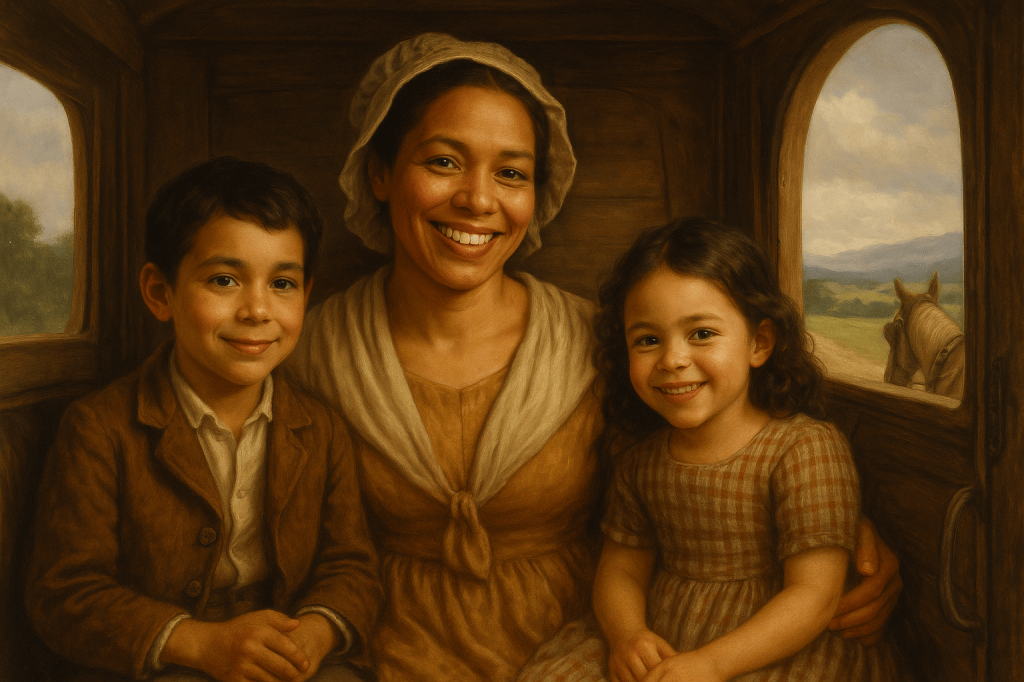
This is her story. This is about a woman who beat the odds as a free woman of color in a slave holding state known for the re-enslavement of the free and her survival to the age of 80 years old as seen in the 1860 Census. It is unknown if she lived to see the emancipation of all enslaved people.
Fanny was bound out as an infant, which means indentured, in 1785 to William Owen in Granville, North Carolina. The indenture document does not specify that she was base born, which means she was not illegitimate, and probably taken from a married couple.
Fanny Pettiford was born in Virginia in 1785 according to the 1850 and 1860 Madison County, Kentucky Census records. The Pettiford families from Virginia were in the Mecklenburg County, Virginia area, which is close to the border of North Carolina where their extended families lived.
The date of Fanny’s arrival to Madison County, Kentucky is unknown although she was first documented as living there in the 1820 Census as a free woman of color with a household of two free children, and appeared in the subsequent Census records for, 1830, 1840, 1850, and 1860 with free people of color household members. Fanny might have arrived in Madison County, Kentucky in 1810 after the date that the 1810 Census was taken. Interestingly, I discovered that Fanny was one of the few free people of color in Madison County, Kentucky in 1820, 1830, and 1840.
How I found my connection to Fanny:
I stumbled upon Fanny while researching my Baxter ancestors, and specifically my third great grandmother, Amanda Baxter, in the 1850 Census. Amanda was the partner of George (Pettiford) White Jr., my third great grandfather.
Amanda and her family members to include her children, her father, uncle and sister were freed or mamumitted from their enslaver, Capt. Edmund Baxter, through deeds and given land in Madison County, Kentucky. There is a DNA connection to the enslaver, Capt. Edmund Baxter’s descendants, and his sister’s descendants, which shows a family connection.
Edmund Baxter freed forty enslaved people living on his plantation in Madison County, Kentucky in the 1850’s. He gave land to the select few family group, which suggests that they were his family members.
The fact that I was able to find my ancestors family in the 1850 Census means that they were FPOC and since Chattel Slavery in America ended on December 6, 1865 with the ratification of the 13th Amendment the formally enslaved would then be seen in the 1870 Census.
While researching my recently freed Baxter family members in the 1850 Census, I decided to look at their neighbors. This is when I found Fanny Pettiford. There was a family with the surname Pettiford living next door to Fanny, which was headed by George Pettiford, my third great grand father and a household member, Amanda Pettiford, who was his partner. What peaked my interest with this find was that all of George Pettiford’s family members, to include his partner and their four children, had the surname Pettiford and these were the same people as my ancestors in subsequent Census records. These same ancestors had the surname White in all subsequent years Census records.
This was a clue that a family connection existed between the Pettiford and White families. George (Pettiford) White Jr. and his whole family were living right next door to Fanny Pettiford. This was an amazing find considering there is no birth certificate showing the mother of George (Pettiford) White Jr.
My research of DNA matches in Ancestry with the Pettiford family descendants and my family members and cousins proved my connection to Fanny’s family and her being my fourth great grandmother. I’ll explain this later in my blog.
Fanny’s parents:
Fanny was the daughter of Drury Pettiford and Lucy Bass. There are no birth records to confirm her parentage but many DNA matches in the Ancestry database to the Pettiford surname lineages and Pettiford genealogy trees are showing connections to Pettiford descendants, specifically the descendants of Lewis Pettiford’s children, siblings Drury, and Easter Pettiford.
Drury Pettiford was a free man of color who was a Revolutionary War patriot and born in North Carolina. He fought in Virginia, was given land in Virginia in 1784 for his service in the war and collected a Revolutionary War Pension later in life when he lived in North Carolina. Fanny was born in Virginia in 1785 right after Drury received his Revolutionary War land in Mecklenburg, Virgina. Drury was in North Carolina and married Lucy Bass in 1781. He then moved back to Virginia for his land and where he fought in the Revolutionary War. Drury lived in Virginia in 1784, the year before Fanny was born.
After Fanny’s indenture to William Owen in North Carolina, she resided in North Carolina in the early 1800’s along with her father and mother, Drury and Lucy Pettiford. Her aunt Easter also lived in North Carolina. This is seen in two indenture documents. Fanny and Drury’s sister Easter both had children indentured in North Carolina by the same man.
During the early 1800’s, both Fanny and Easter had children taken from them by the court and indentured to an enslaver living in North Carolina named Duke Kimball. This is the document showing Fanny’s son Jesse’s indenture and this the document showing Easter’s daughter, Polly’s, indenture. Duke Kimball lived in North Carolina close to Drury Pettiford in the Census record, which shows Kimball’s connection to Drury, Fanny, and Easter.
The why Fanny migrated to Madison County, Kentucky mystery is solved:
Fanny went to Kentucky to be close to her son, Jesse Pettiford, who had been indentured as an infant by Duke Kimball in Granville, North Carolina to be taught the skill of planting. This is the link to the document. Indentures were done if the mother lacked income to care for her child and also to provide a source of free labor for an enslaver. Duke Kimball then moved to Madison County, Kentucky.
To my surprise, Duke Kimball along with Jesse and other family members migrated to Madison County, Kentucky, according to the Madison County, Kentucky 1810 Census. Jesse was listed as a slave in Duke Kimball household in the 1810 and 1820 Madison County, Kentucky Census. In the 1830 Census, three free children of color were listed. Duke Kimble indentured five other children of color in Madison County, in these documents.
Upon his freedom, Jesse moved to North Carolina and was in Drury Pettiford’s household. This is a link to a blog about Drury, Fanny, and Jesse.
This blog is also about the history and family of Fanny Pettiford, a Free Woman of Color, and her enslaved man, George (Burgess) White Sr. born 1789, my fourth great grandfather:
George (Burgess autosomal and Y DNA) White Sr. was born in All Hallows Parish, Anne Arundel County, Maryland. George, age five, and his mother were enslaved by Benjamin Burgess, and then sold to well known Maryland merchants upon Benjamin’s death in 1793, as seen in Benjamin Burgess’ inventory and estate settlement dated 1794. George and his mother Eleanor were subsequently sold by merchants to the enslaver, John Roland White, John Roland White’s family migrated to Madison County, Kentucky with George and his mother when George was five years old.
George (Burgess) White Sr.’s connection to me is well documented through Ancestry DNA cousins, and source documents to include my great great grandmother, Eleanor White Robinson’s death certificate, George (Burgess) White Sr.’s will, and George (Pettiford) White Jr’s manumission document when his father freed him.
My family members and I have Ancestry DNA matches to the descendants of Benjamin Burgess and five of his brothers’ descendants. Benjamin’s brothers were from Maryland, and moved to Virginia, and Kentucky. This Burgess lineage, from Anne Arundel, County, Maryland is the only Burgess family that my family shares DNA with in the Ancestry data base, meaning we descend from the Maryland Burgess families who were the early colonial founders of Maryland.
In addition, a George (Burgess) White Sr. male descendent did a Y-DNA test, which shows the male Haplogroup linage, and it is the same as the Burgess male line from Anne Arundel County, Maryland. A Y-DNA test shows matches along the direct paternal lineage going back hundreds of years.
Fanny and George’s love connection:
Fanny and George were the parents of their born free and then subsequently indentured child, George Pettiford White Jr. born 1822, my third great grandfather. George (Pettiford) White Jr. was born free since the child of a free woman carried her status and was also free. His free status was known as the doctrine of partus sequitur ventrem, in Latin, which has the meaning “the child follows the belly”.
How the liaison occurred between them is unknown but George (Burgess) White Sr. was still enslaved in 1820 and Fanny being of a free status they might have met during a working relationship where Fanny might have done work such as seamstress, cooking or planting at George’s enslaver’s household but this is speculation. In addition, George, while enslaved, may have been able to leave the enslaver’s property to do work in the community for income, as was done in Kentucky. This implies that George might have had quasi-freedom. George Sr. was emancipated in 1830 in Madison County, Kentucky.
It is interesting to see that although they lived in two diverse social and status situations that they were able to join together to form a romantic union and to produce a child. Their situation would not allow for marriage. In addition, since Fanny was a free woman in the early 1800’s no one would question her child’s paternity.
George Jr. was born free and carried his mother’s status, and he is probably the male child in the 1830 Madison County, Kentucky Census since he was born in 1822 and eight years old.
Fanny’s other children were also in the 1830 Madison County, Kentucky Census to include Alfred, Lotty, and Henderson. This is a court document requesting to indenture Fanny’s other children Alfred, Lotty, and Henderson.
George White Jr’s indentured status is seen by his absence from Fanny’s household during the 1840 Madison County, Kentucky Census. George is not listed in Fanny’s household in the 1840 Census which is when he was subsequently indentured or bound out to learn a trade, which was frequently done. George Jr.’s skill is seen in the trade of a mattress maker in the furniture and fixtures industry, which was according to the 1850 Census record. Gaining this trade had required him to work under the guidance of a person with the occupation of furniture maker during his indenture. A mattress maker’s work is very labor intensive and required sewing skills. The mattress making skill required mentorship and those skills were taught to him by someone with furniture making skills. George Jr.’s craftmanship ability required him to socialize with many levels of society.
Indentures were a common practice during colonial America. Free children were taken from their unmarried free mother by the court to be bound out until they reached the age of 21. This allowed for the child to be taken care of so that they could learn a trade, receive an income, and provide free labor. This was also done so the child would not become a burden to the state due to the mother’s lack of income.
George Jr.’s freedom from indenture was later purchased by his father between 1830 and 1850. He then owned him and subsequently freed him. George was then in the 1850 Census living next door to his mother Fanny Pettiford and having the Pettiford surname.
Fanny and George Sr. lived in close proximity based on the old Madison County map. Fanny lived on Otter Creek, which is a 65 square mile water shed that flows northward into the Kentucky River. George lived near the Kentucky River at the intersection of Otter Creek. Fanny’s son Henderson purchased land on Otter Creek in 1830. George Sr. purchased land after his manumission in 1830.
My families connection to the Pettiford surname through Ancestry DNA matches:
A search of the Ancestry database using the DNA kits I manage in Ancestry showed DNA matches to the descendants of Drury Pettiford’s sister, Easter, and his daughter Fanny. The descendants DNA connections are to the Pettiford families who were FPOC and the lineages originated in North Carolina and Virginia.
In addition, the DNA analysis utilizing the Ancestry DNA data base of cousin matches was to the known Pettiford families who migrated from Virginia and North Carolina to Ohio, Indiana, and Canada. The matches are to my paternal grandmother, Margaret Collins Arnold’s, lineage through Autosomal DNA.
Easter Pettiford DNA matches:
I used the Ancestry Custom Cluster tool in the Pro Tools with my cousin’s DNA to match people with the Pettiford surname and the surname in their tree that descend from two of Easter’s son’s descendants. The Custom Cluster tool then produced a list and graph of all persons in the DNA Shared Matches that all share a common ancestor. The Custom Cluster had 47 matches in the list and graph from Ancestry that are all the people, and my close cousins, that descend from George Jr. and Amanda Baxter.
Fanny Pettiford DNA matches:
The DNA analysis utilizing the Ancestry DNA data base of cousin matches has Shared Matches to two DNA kits that I manage that matched five DNA cousins who are Fanny’s direct descendants through her son Alfred Pettiford. Alfred was George (Pettiford) White’s half brother. The DNA matches are to my close family members. The DNA matches were at the fourth or fifth cousin level, which shows a fourth great grandmother connection with the matches.
There are DNA matches to Fanny’s son Jesse Pettiford Sr. who was indentured by Duke Kimball. Jesse later married Edna Evans and they had two sons, Jesse Jr. and Albert. Jesse Pettiford Jr. fought in the Civil War in the United States Colored Troops (USCT).
My close family member’s DNA matches six of Jesse Pettiford Jr.’s descendants. The six cousin matches were in a one family grouping and the family tree had Jesse Pettiford’s descendants.
There is also a DNA match and family tree match to Fanny’s brother Archibald’s daughter Sally Pettiford Valentine’s descendant to a close family member DNA kit that I manage.

